
If you’re planning a trip to Portugal, someone’s going to tell you to eat a pastel de nata. Probably within five minutes of announcing your flight.
Then you’ll arrive, see these golden little custard tarts everywhere—and wonder, “Wait… why do some signs say pastel de nata and others pastel de Belém?” Is it a regional thing? Are they the same? Is one supposed to be better?
Let’s clear that up. And more importantly—let’s talk about which ones are actually worth standing in line for.
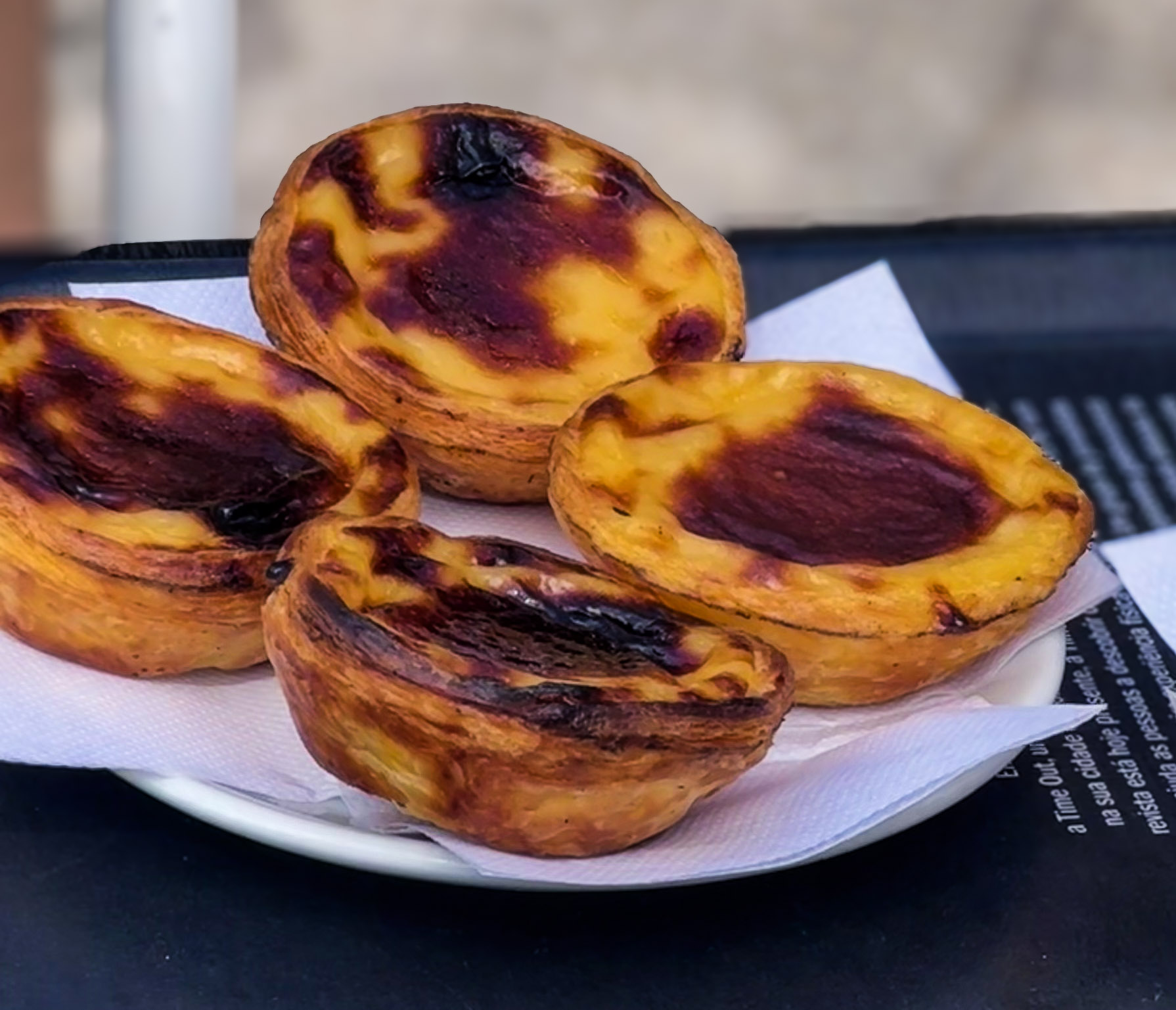
What Exactly Is a Pastel de Nata?
Tiny. Warm. Creamy. Flaky. Dangerous if you’re trying to avoid carbs.
A pastel de nata is a Portuguese custard tart with layers of crisp puff pastry holding a soft, eggy custard that’s baked until the top caramelizes into a freckled, golden skin. You’ll see locals casually tossing back one (or three) with their coffee, especially mid-morning.
They’re usually served warm, and you’ll find a shaker of cinnamon or powdered sugar nearby if you want to fancy it up. But honestly, they don’t need anything. Just pick it up, bite in, and accept your new addiction.
Okay, So Then What’s a Pastel de Belém?
Good question. This is where things start getting… territorial.
A pastel de Belém is a very specific kind of pastel de nata made only at Fábrica dos Pastéis de Belém, a bakery in the Belém neighborhood of Lisbon. That’s the only place in the world that gets to use the name. Think of it like “Champagne” vs. “sparkling wine”—same idea, but one comes from a protected origin with a secret recipe.
The backstory? In the early 1800s, monks from the nearby Jerónimos Monastery started selling pastries to make a little cash after their monastery shut down. Their custard tart recipe was passed to the bakery next door… and the rest is history. To this day, it’s locked up tighter than a Taylor Swift vault track.

Is There a Real Difference in Taste?
Yes. But it depends who you ask (and how fresh it is).
Here’s what people say about pastéis de Belém:
- The crust is flakier, with a satisfying snap
- The custard is less sweet, more eggy
- It’s served piping hot, straight from the oven
- It’s slightly bigger than a typical nata
- You eat it standing up next to a hundred other people doing the same thing
Now compare that to your average pastel de nata, which might be sweeter, smoother, and possibly a little more “dessert-y.” There’s no one-size-fits-all. Some of the best natas come from hole-in-the-wall cafés you’ll never find on a tourist map.
So Which Should You Get?
Both. This isn’t a rivalry—it’s a very delicious scavenger hunt.
Yes, go to Belém. Stand in line. Get the original. Eat it while it’s still warm. You’re in Lisbon, and this is one of those classic tourist things that’s actually worth it.
But also—try others. Buy one from a bakery near your hotel. Pick one up with your morning espresso. Taste your way through the city. And if you’re heading to Porto later? You’ll find excellent ones there too.
Each tart is slightly different, which makes trying them all part of the fun.
Final Take: Pastel de Nata vs Pastel de Belém
Here’s the cheat sheet:
| Pastel de Nata | Pastel de Belém | |
|---|---|---|
| Available at | Most bakeries in Portugal | Only at Fábrica dos Pastéis de Belém |
| Recipe | Standard (varies by shop) | Top-secret OG recipe |
| Flavor | Sweet, creamy, eggy | Flaky, eggier, less sweet |
| Vibe | Casual, daily treat | Destination-worthy, lines included |
Verdict? Don’t pick a side. Just say yes to both. You’re in Portugal—this is what dessert dreams are made of.
 Vela Via Travel
Leave a comment